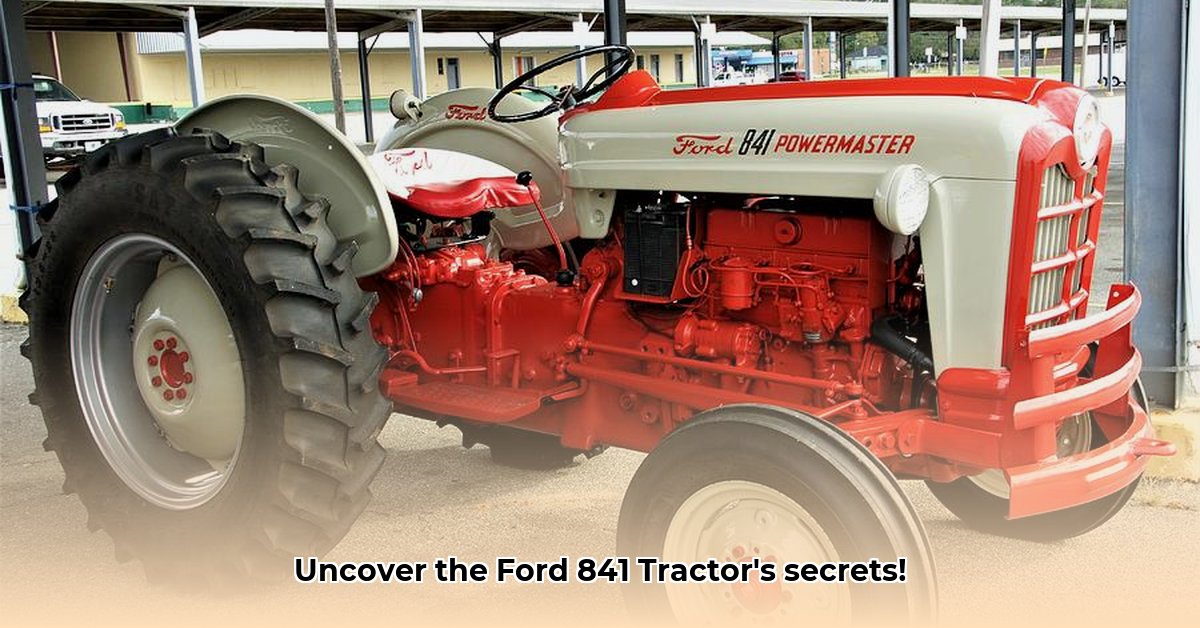
The Ford 841 Powermaster—a name synonymous with rugged dependability and a bygone era of American agriculture. This iconic tractor, produced between 1957 and 1962, wasn't just a machine; it represented innovation and adaptability in a rapidly changing agricultural landscape. This comprehensive guide delves into its technical specifications, historical context, operational aspects, restoration, and collector's value, providing a complete picture for enthusiasts, historians, and collectors alike. For more Ford tractor history, check out this excellent resource.
Technical Specifications and Performance: The Heart of the Workhorse
Beneath the Ford 841's hood resided a robust 2.8-liter engine, offering farmers a choice between gasoline, liquid propane gas (LPG), or diesel fuel—a rarity for its time. This flexibility, driven by fluctuating fuel prices and regional availability, made the 841 remarkably adaptable. While sources report horsepower ranging from 56 to 62 hp, these discrepancies likely stem from variations in testing methodologies and record-keeping practices of that era. The most accurate, commonly accepted figure is approximately 62.6 gross horsepower.
The transmission options also contributed to the 841's versatility: a simpler 4-speed unsynchronized gearbox, or a more advanced 12-speed Sherman "Step-Up Step-Down" transmission. The absence of synchronization in the 4-speed model presented a unique challenge for operators accustomed to modern, smoother shifting mechanisms. The hydraulic system, while functional, was relatively modest by today's standards, with a capacity of only 2 gallons. This limited the size and type of implements that could be efficiently operated.
Isn't it fascinating how technology has evolved? How would a farmer accustomed to the 841's hydraulic system react to the advanced hydraulics of modern tractors?
Here's a comparative table summarizing the engine variants:
| Engine Type | Approximate Horsepower | Fuel Type | Transmission Options |
|---|---|---|---|
| Gasoline | 62.6 (approx.) | Gasoline | 4-speed, 12-speed |
| LPG | 62.6 (approx.) | Liquid Propane Gas | 4-speed, 12-speed |
| Diesel | 62.6 (approx.) | Diesel Fuel | 4-speed, 12-speed |
A Blast from the Past: Historical Context
The Ford 841 was manufactured in Highland Park, Michigan, during a period of significant transformation in agriculture. The late 1950s and early 1960s witnessed rapid technological advancements, and fuel costs were a primary concern for farmers. The offering of multiple fuel choices was a stroke of genius, allowing farmers to select the most economical and readily available option. Diesel, with its efficiency and increased pulling power, was gaining traction as a preferred fuel for agricultural tasks. This adaptability is considered a significant factor in the 841's success during its production run.
Driving the 841: A Farmer's Perspective
Operating a Ford 841 presented a stark contrast to modern tractor operation. The 4-speed model's lack of synchronized gears demanded skill and finesse from its operator. The open operator station, while simple, provided minimal protection from the elements. This design choice, typical of the time, offered a direct connection with the machine yet exposed the operator to all weather conditions. The challenges underscore the unique relationship between the farmer and his machine during this era.
Keeping It Running: Restoration and Maintenance
Restoring a Ford 841 is a labor of love for dedicated collectors. Sourcing parts can be a challenge, but online forums dedicated to classic tractors and specialized parts suppliers are invaluable resources. Common issues involve the engine, transmission, and hydraulic system. Preventative maintenance is vital for continued operation.
Step-by-Step Restoration Guide:
- Assessment: Conduct a thorough examination of the tractor's condition.
- Part Sourcing: Identify and procure necessary parts, balancing originality with availability.
- Disassembly: Methodically disassemble the tractor, documenting each step for reassembly.
- Repair/Replacement: Repair or replace damaged or worn components.
- Reassembly: Carefully reassemble the tractor, following the documented steps.
- Testing & Tuning: Test the functionality of all systems and make adjustments as needed.
- Cosmetic Restoration: Restore the tractor's exterior to its original appearance.
Collector's Corner: Value and Significance
Today, the Ford 841 is a coveted item among collectors. Its value varies depending on its condition, originality, and any unique features. The tractor's serial number, typically located on the left side of the transmission case, is crucial for identifying its production year and model variations. The 841 represents more than a piece of machinery; it embodies a connection to a rich agricultural heritage, making it a cherished possession for many.
Conclusion: A Legacy of Innovation and Endurance
The Ford 841 Powermaster was more than a tractor; it was a symbol of adapting technology and resilience. Its design, performance, and fuel versatility cemented its place in agricultural history. For today's collectors, it represents a challenge and a link to the past. Whether you're a seasoned collector or simply drawn to the charm of vintage machinery, the Ford 841’s story stands as a testament to innovation and hard work.